
A Systematic Approach to Reusable Packaging
MEHRCE Systems Map shows interrelations of key factors for a successful reusable packaging system in Germany

MEHRCE Systems Map shows interrelations of key factors for a successful reusable packaging system in Germany
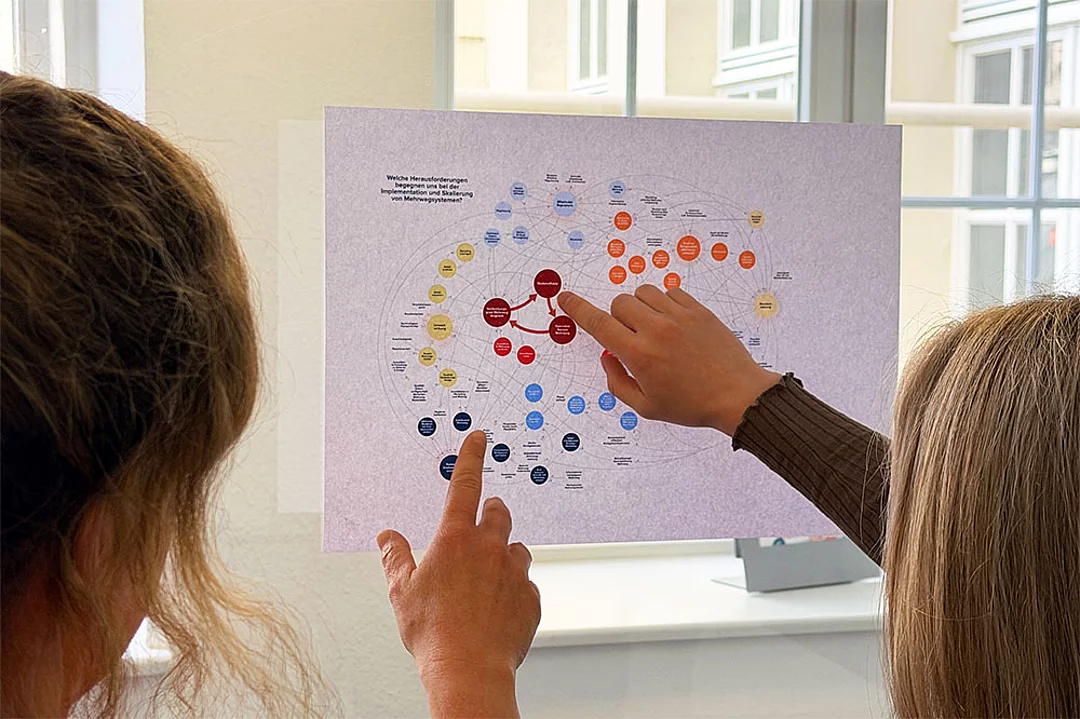
Reusable cup instead of disposable cup – many cafés now offer their customers this choice. Similar options already exist for many other uses, from returnable glass bottles to reusable takeaway containers. However, these multiple-use options are rarely taken up. That raises the question: What challenges do we face in implementing and scaling reusable systems?
To find out, the Wuppertal Institute, Leuphana University Lüneburg, the German Association for Reusable Packaging (Mehrwegverband Deutschland e.V.) and Kühne Logistics University (KLU) have created a "Systems Map" as part of the MEHRCE joint research project. The innovative tool works in a similar way to a mind map: it visualises challenges and success factors within the German reusable packaging system, grouped by colour-coded thematic areas, such as digitalisation, standardisation, operating cost or logistics. Arrows indicate the cause-and-effect relationships between those areas, e.g. influencing factors, drivers, or feedback loops.
The map thus makes complex interrelationships visible and creates a common basis for promoting reusable packaging systems. Business and politics can use the map as a tool to identify untapped potential and find starting points for change. It also highlights options for consumers to support environmentally sound reusable packaging.
Key factors for wider adoption of reusable packaging in Germany
The researchers identified four key aspects to help reusable packaging become more widely adopted in Germany:
- Reusable packaging requires a holistic approach – both socially and technically. To this end, the map provides an overview of the factors that hinder and those that support its adoption.
- Establishing standards for reusable packaging – for example regarding size and labelling, because a standardised return process and data (such as location, hygiene status, and availability of empties) facilitate entry into existing reusable systems, such as a yoghurt jar that can be returned at any supermarket.
- The user-centered design of reusable packaging and processes – for example, the jar for spreads that is easy to scoop out and rinse. Clear labeling and communication create transparency and make it easier for producers and end consumers to use reusable products.
- Clear regulations – this includes, for example, binding targets set by policymakers and regulations to reduce packaging waste. Standardisation, for instance regarding packaging sizes, also helps ensure that binding waste prevention targets can be met.
The Systems Map is available as a digital presentation and as an online brochure for download via the links below.
About the DATIpilot MEHRCE Innovation Community
MEHRCE is an innovation community led by the Wuppertal Institute and the German Association for Reusable Packaging. The innovation community supports and provides funding for community projects under the DATIpilot funding scheme of the German Federal Ministry of Research, Technology and Space (BMFTR). It brings together over 200 stakeholders from the reusable sector – including reusable system operators, manufacturers, retailers, research institutions, local authorities and non-governmental organisations. Leuphana University of Lüneburg and Kühne Logistics University (KLU) are also members of the management team.