
Recycle for Good: Working Together to Tackle Marine Plastic Pollution
Wuppertal Institute and project partners strengthen efforts to prevent marine litter and promote recycling
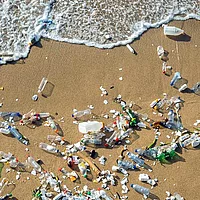
Wuppertal Institute and project partners strengthen efforts to prevent marine litter and promote recycling
As one of the global hotspots for plastic pollution, Southeast and East Asian countries now account for nearly a third of global plastic consumption, according to the Organisation for Economic Co-operation and Development (OECD) – much of which ends up in oceans or lakes. To relieve the pressure on these waterways, strengthening waste management systems is crucial.
Therefore, the "Recycle for Good" project aims to reduce marine pollution caused by packaging waste in Southeast Asia. The project partners are focusing particularly on Thailand, Indonesia, and the Philippines. In these countries, hard-to-recycle plastic packaging frequently ends up in landfills, in the environment, or incinerated due to a lack of infrastructure and insufficient waste sorting.
The researchers' goal is to prevent 10,000 metric tonnes of plastic waste from entering the oceans in the first place. To achieve this, they are expanding local recycling infrastructure alongside local partners – for instance, by constructing new or modernised processing facilities for used beverage cartons and flexible plastics. The research team also contributes to the further development of Extended Producer Responsibility (EPR) systems. By demonstrating practical, scalable recycling models and sharing data and insights directly with producer responsibility organisations/take-back systems and policymakers, they are establishing the groundwork for long-term, systemic solutions that extend beyond the project's lifetime.
In Indonesia, "Recycle for Good" has already established activities in Greater Jakarta. The project is now expanding to additional regions across the country: East Java (including Surabaya and Malang), West Nusa Tenggara, and Bali. The project currently encompasses 389 sites and a diverse network of schools, communities, cafes, businesses, religious institutions, and waste collectors. Together, they are working to expand drop-off points that connect schools, collectors, and recycling aggregators, aiming to foster public participation and embed sustainable practices into everyday life.
"With this expansion, we are intensifying efforts to improve waste sorting, collection, and recycling – while simultaneously promoting stronger engagement from communities and stakeholders along the entire packaging waste value chain," explains Burcu Gözet, Co-Head of the Circular Systems Research Unit at the Wuppertal Institute and project lead.
Furthermore, educating students is another central focus: the goal is to inspire 100,000 young people for sustainable recycling, reward participating schools, and directly enhance educational facilities through the use of recycled materials (recyclates). Utilising gamification elements such as rewards, challenges, and shared goals, an app developed by Plastic Bank creates incentives for the proper sorting and collection of packaging waste across all relevant material streams, including beverage cartons and flexible packaging.
About the 'Recycle for Good' Research Project
The Wuppertal Institute is carrying out the project in collaboration with Plastic Bank, SIG International Services GmbH, and decision-context GbR, delivering evidence-based content on waste management in the respective target countries. The project is funded by the "Marine Debris Framework – Regional hubs around the globe" (Marine:DeFRAG) funding program, managed by ZUG (Zukunft – Umwelt – Gesellschaft) on behalf of the Federal Ministry for the Environment, Climate Action, Nature Conservation and Nuclear Safety (BMUKN).