
Topics
Shapinga Socially JustTransformation
A sustainable future will only successfully endure if it is built on the foundation of social justice. The Wuppertal Institute is researching suitable ways of achieving this. Focus topics include driving a fair heat transition that keeps housing affordable, creating equitable and inclusive mobility concepts, and fostering support for the necessary structural change processes.
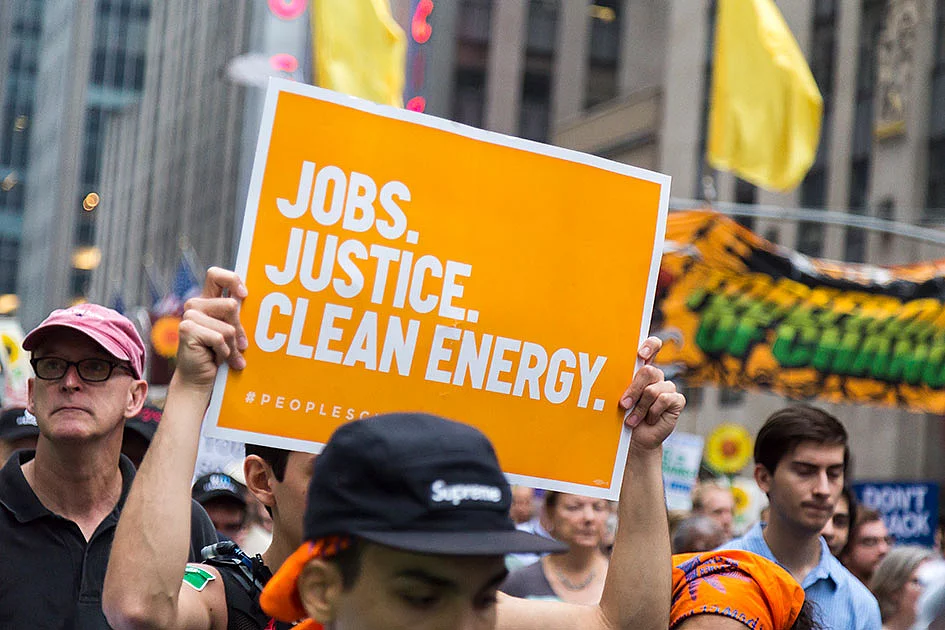
The issues of sustainability, climate protection and social justice are inextricably linked. But whether it's the phase-out of the Rhenish mining area, the heat transition’s impacts on the rental sector or carbon pricing mechanisms, the transformation to a carbon-neutral society must not exert an undue burden on low-income households. Instead, the load must be fairly distributed: new prospects and opportunities to participate created by the transformation must be made accessible to all, thereby fostering social acceptance of the necessary chance processes. The Wuppertal Institute's research confirms that implementing carbon pricing without social compensation mechanisms – such as climate and transformation grants or subsidies – would result in regressive distribution effects. Such policies would exert a greater burden on people with low incomes, relative to their financial means, than on the wealthy.
Short-term relief measures implemented to mitigate high energy prices – such as energy price caps and petrol price discounts – fall short and frequently fail to relieve the burden on those most in need of support.
Long-term reductions in mobility poverty and energy poverty will require long-term, structural solutions. This is why the Wuppertal Institute examines issues including socially equitable planning of municipal heating systems; improving German government support for energy-efficient retrofitting measures; and innovative approaches such as fair, all-inclusive rental models, convenient and affordable local public transport systems and socially equitable pricing models for basic energy supplies. If local authorities' plans for energy supply systems and mobility networks are to avoid leaving financially vulnerable households and low-income neighbourhoods behind, while simultaneously improving participation, they must integrate social criteria and targeted, tailored measures from the outset.
However, social aspects must also be considered in relation to climate change adaptation, not least because low-income households often live in areas most impacted by climate change. In urban areas, it is particularly important to protect children and elderly people during periods of extremely high temperatures – which raises the need for climate-resilient urban development.
The ideal choice is to implement measures that deliver positive effects at different levels. The Wuppertal Institute explicitly seeks to identify synergy effects and develop co-benefits of climate protection and climate adaptation measures. For example, thermal insulation in buildings links climate protection (avoiding greenhouse gas emissions) with climate adaptation, because effective insulation protects against heat in summer while reducing energy demand – and, by extension, carbon emissions – in winter. In this era of climate change, however, protecting critical infrastructure and particularly vulnerable groups (i.e. hospital patients and nursing home residents) is also a high priority.
Research examples
Researchers at the Wuppertal Institute examine the social dimension of the transformation and its dynamics from a scientific perspective, developing concrete strategies to drive future-oriented change. Integrated policy and intelligent synergies between primary distributive measures are particularly important in this context. This means, for example, ensuring that fiscal, education and social policy dovetails with climate and resource policy.
One of the Wuppertal Institute's key research focuses is examining means of embedding the energy and mobility transition as part of public service provision. Our researchers are investigating, for instance, ways to avoid blackouts, with potential options including pre-paid electricity meters and vouchers for making energy savings. In addition, affordable pan-modal public transport tickets have a highly targeted social impact and offer people who do not own a car a fair opportunity to participate in social life, while also making an important contribution to climate protection. The Institute’s researchers also engage with the consequences of the structural changes associated with these transformation processes. If an industrial transformation is to succeed as a just transition that protects workers' interests – in the Rhenish lignite mining area, for example – it will require forward-looking, policy-driven management of these changes and corresponding governance to create new prospects for employees and for the region in equal measure.
Earth for All – Germany, a book co-authored by the Institute with the Club of Rome, highlights the need to take account of social aspects of the transformation in many different ways. In this book, the Institute's researchers also emphasise that fairness and tackling social inequality can secure the necessary societal backing and make change processes markedly easier.
Collaboration and engagement with practitioners and on committees
The transformation will only succeed through dialogue. In the course of its research, the Wuppertal Institute cooperates closely with an extensive network of stakeholders with specific social expertise. Our partners include the Federation of German Consumer Organisations, the Institute for Social Climate Policy and the Social Climate Council. This transdisciplinary exchange ensures that scientific insights remain practically relevant while also supplementing specialist perspectives.
In addition, the Wuppertal Institute's researchers actively contribute their expertise to prominent political committees, including the Energy Poverty working group at the Ministry of Economic Affairs, Industry, Climate Action and Energy of the State of North Rhine-Westphalia (MWIKE NRW) and the Social Climate Council.
Links
Topics
Research foci in the field of social justice are:
News
Here you find up-to-date information on research findings and activities in the field of social justice.
News on the topic
Advancing Gender Equality in Just Energy Transitions
Global Networking Activity Series on Gender and Energy Transitions: Existing inequalities and inclusive pathways

A Fair and Inclusive Circular Economy
New framework focuses on indicators and participation

Wuppertal Institute and Earth4All seal Partnership
Official Memorandum of Understanding enhances joint research, policy advice and communication
Publi-cations
You find all scientific publications on our publication server:
Projects
Research in the field of social justice takes place in an inter- and transdisciplinary context. In the following you find selected sample projects. A complete list is available here.