
Climate
Adapting toClimate Change
The impacts of climate change are noticeably worsening. Researchers and experts have confirmed that extreme weather events are occurring around the world more frequently and with greater severity, while water and air temperatures are also rising steadily. The health and economic impacts are worsening as a result.
The impacts of climate change are clear to see – and not only in the countries most exposed to such risks. Instead, the impacts are intensifying in Germany, too: heatwaves and periods of drought along with heavy rainfall and flooding are occurring markedly more frequently, with extreme weather events becoming more prolonged. Climate models indicate that this trend is set to worsen further. It is, therefore, essential that we as a society adapt to these consequences of climate change.
Measures must be enacted at every level – at the European level and at federal, state and municipal levels. Back in 2021, the federal state of North Rhine-Westphalia responded by passing Germany's first Climate Change Adaptation Act. Corresponding national legislation was promulgated by the German federal government in November 2023 and also provided for the German Climate Adaptation Strategy, which was adopted in 2024. By taking these steps, the federal government aims to make German society more resilient to the consequences of climate change as part of its duty to protect the public interest. The European Union has also developed new guidelines within its Adaptation Strategy to support its member states in enacting coordinated climate adaptation policy.
Adaptation at the local level: Municipalities prepare for the impacts of climate change
The specific impacts of climate change usually differ from region to region, meaning that adaptation measures are most effective when tailored to local circumstances. As a result, equipping municipalities to protect their citizens against the consequences of climate change presents a unique challenge, as towns, cities and municipalities are impacted differently by climate change. Their buildings and infrastructure often exacerbate the effects of climate change, contributing to the formation of heat islands in summer, or flooding after heavy rainfall. This makes it vital to implement measures to protect all citizens – especially vulnerable groups – as a key element of public service provision.
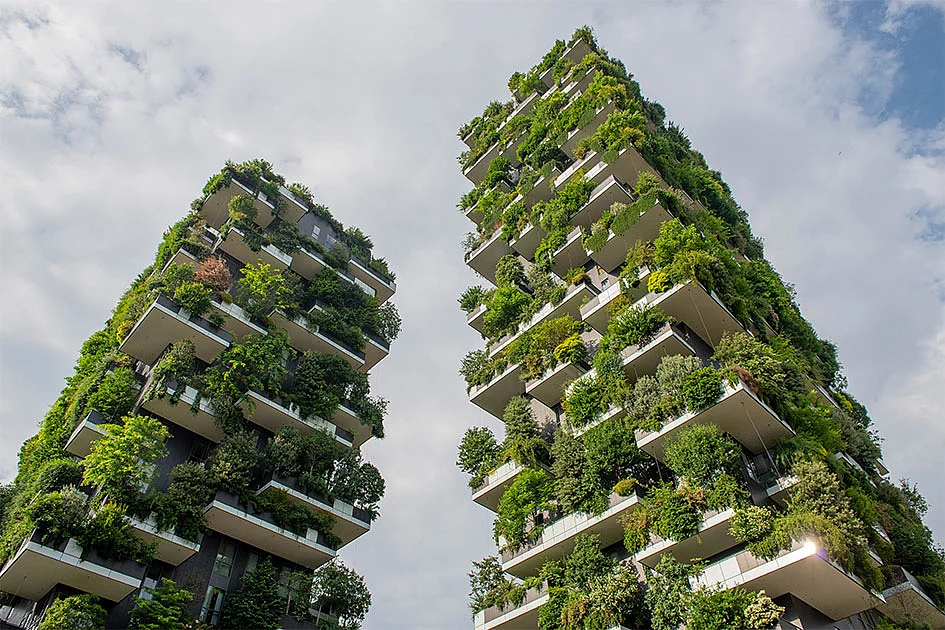
"Sponge city" concepts, such as permeable surfaces and rainwater retention ponds, can make a useful contribution, as can nature-based solutions including green façades and pocket parks. Desealing measures prevent flooding, while urban greening provides shade and protection from UV radiation. In addition, many nature-based solutions help by gradually absorbing water when there is heavy rainfall – and then releasing it back into the urban environment on warm days through evaporative cooling.
When developing approaches like these at municipal level, it is particularly important that climate change adaptation and mitigation are considered in tandem and properly integrated in planning and implementation. Ultimately, there is immense potential to leverage synergy effects between the two issues, including in nature-based approaches. However, conflicts between the two issues can arise, including when competing for planning capacity at the municipal level or approval from state-sector budgets.
Overall, it is important to implement preventative adaptations to the impacts of climate change, rather than a purely reactive approach. This is because, as climate change accelerates, technical adaptations and emergency measures will be stretched to their limits. With this in mind, climate adaptation measures should be viewed not as a substitute for climate protection measures, but as a second, complementary pillar. By helping to reduce emissions, climate protection works upstream to reduce the severity of extreme weather events such as torrential rain and heatwaves, reducing the risk that such events present to the population.
Safety and civil protection in urban contexts
The intensifying impacts of climate change – including heat waves, torrential rain and flooding – present growing challenges for towns and cities. With this in mind, safety and civil protection are no longer limited to protecting the population against acute crises and catastrophes but also include long-term reinforcement of climate-stable cities and their citizens.
Research is therefore centred around concepts that make cities and their citizens more resilient. These concepts include forward-thinking urban planning, protecting particularly vulnerable groups and creating climate-resilient infrastructure. The objective is to ensure safety, health and a liveable environment for the long-term, even in the face of changing climate conditions.
Interactions between society, climate protection strategies and climate adaptation strategies
As climate change intensifies, the economy and society in general are under increasing pressure. However, a changing climate also has implications for key climate protection strategies. Against this backdrop, the ScenClimPact project analyses the plausibility of existing climate protection scenarios, taking account of the progression of climate change. The researchers are systematically investigating the impact of climate change impacts on transformation pathways in individual sectors. Building on these insights, the project also examines the synergies and target conflicts arising from the interactions between climate protection and climate adaptation strategies. In addition to technical and (infra)structural factors, the project also takes account of the social context. This is important because climate adaptation and climate protection are at the heart of social transformation processes, political strategies and different usage requirements.
Impacts of climate change and consequences for health
The impacts of climate change on human health is an increasingly pertinent topic. The Wuppertal Institute has published an exploratory study in partnership with BARMER, a German statutory health insurance provider, to systematically identify and evaluate the health impacts associated with climate change. In addition, the Wuppertal Institute worked with the North Rhine-Westphalia Hospital Association (KGNW) to develop Target Vision: Climate-Neutral Hospital, which includes implementation-oriented advice to help hospitals implement climate change adaptation measures – taking account of the needs of both patients and healthcare workers.
The Identification of Social-Ecological Problems as a Basis for Integrated Strategies for Sustainable and Healthy Cities and Neighborhoods of Tomorrowproject produced an Index: a set of indicators that municipal authorities can deploy to identify local socio-ecological problems and effectively prioritise measures to promote healthy and sustainable urban development. Its successor project is refining the ProGiS Index to provide a highly practical support system for municipalities.
The Wuppertal Institute also examines aspects of the circular economy. The Circular.Care.Solingen project, for example, looks at means of establishing of circular economy models practice in the healthcare sector through sustainable procurement, enhanced waste management and scientifically guided pilot projects. Finally, in the EBEM-KAT project, researchers are systematically comparing the ecological and economic impacts of different instrument types to provide a robust basis for decision-making in the interests of resource-conserving hospital operations.
How business is tackling the impacts of climate change
The world of business must also adapt. This isn't just a matter of buildings and infrastructure being destroyed by extreme weather events. For example, rising levels of climate-related damage in supplier countries are also impacting supplies of raw materials, leading in turn to production losses. The increasing effects of climate change are also being felt in the form of rising employee health costs. The number of sick days is on the rise, while employee productivity is inevitably hampered during periods of high temperatures. Climate change risk analyses enable companies to address their specific vulnerabilities and take preventive action where necessary, thereby creating climate-resistant value chains and resilient business models.
Research into the impacts of climate change: Wuppertal Institute projects
The Wuppertal Institute is engaged in a host of research projects related to climate change adaptation across its four research divisions. Current projects include analysing climate change impacts and their implications for climate protection scenarios in the ScenClimPact project; an interdisciplinary investigation into the impacts of the Ahr Valley flood in the SOZIAHR project, conducted in partnership with the University of Bonn; examining socio-ecological problems in the ProGiS project; and developing climate-resilient and healthy cities in projects such as URBAN SusHealth and InnovationsCommunity Urban Health (ICUH). In addition, the Wuppertal Institute supports the networking of key climate change adaptation decision-makers in North Rhine-Westphalia at Fachforum Klimaanpassung NRW, a conference and engagement platform. At the international level, the Wuppertal Institute contributes to the ACCLIMATE project, which aims to develop strategies for climate-resistant, low-emission development. Furthermore, the WISIONS Transitions project – advanced together with partners in Nepal and Nigeria – seeks to identify adaptations to improve the resilience of livelihoods in regions particularly affected by climate change.
The Institute's researchers also monitor developments in international climate adaptation policy, including at the annual Conference of the Parties (COP), and analyse the outcomes.
Publi-cations
You find all scientific publications on our publication server:
Projects
Here you find research activities in the field of climate change adaptation.