
Impact-DrivenResearch
The Wuppertal Institute has set its sights on establishing innovative impact management as one of its core competences. This decision is intended to further optimise the added value of its research to society and enhance transfer opportunities.
The Wuppertal Institute strives to support political stakeholders, business and society in managing complex transformation processes through a science-based approach. The impact of research activities is a key focus for the Wuppertal Institute – looking beyond the scientific insights that research generates. The proprietary impact model mapping the traceable impacts of the Institute’s work distinguishes between five different levels of impact. These levels range from simply conveying knowledge to fostering motivation and developing competence through to developing and implementing concrete solutions. In this way, the Wuppertal Institute strives to help turn good ideas and scientific insights into tangible changes, thereby accelerating sustainable development.
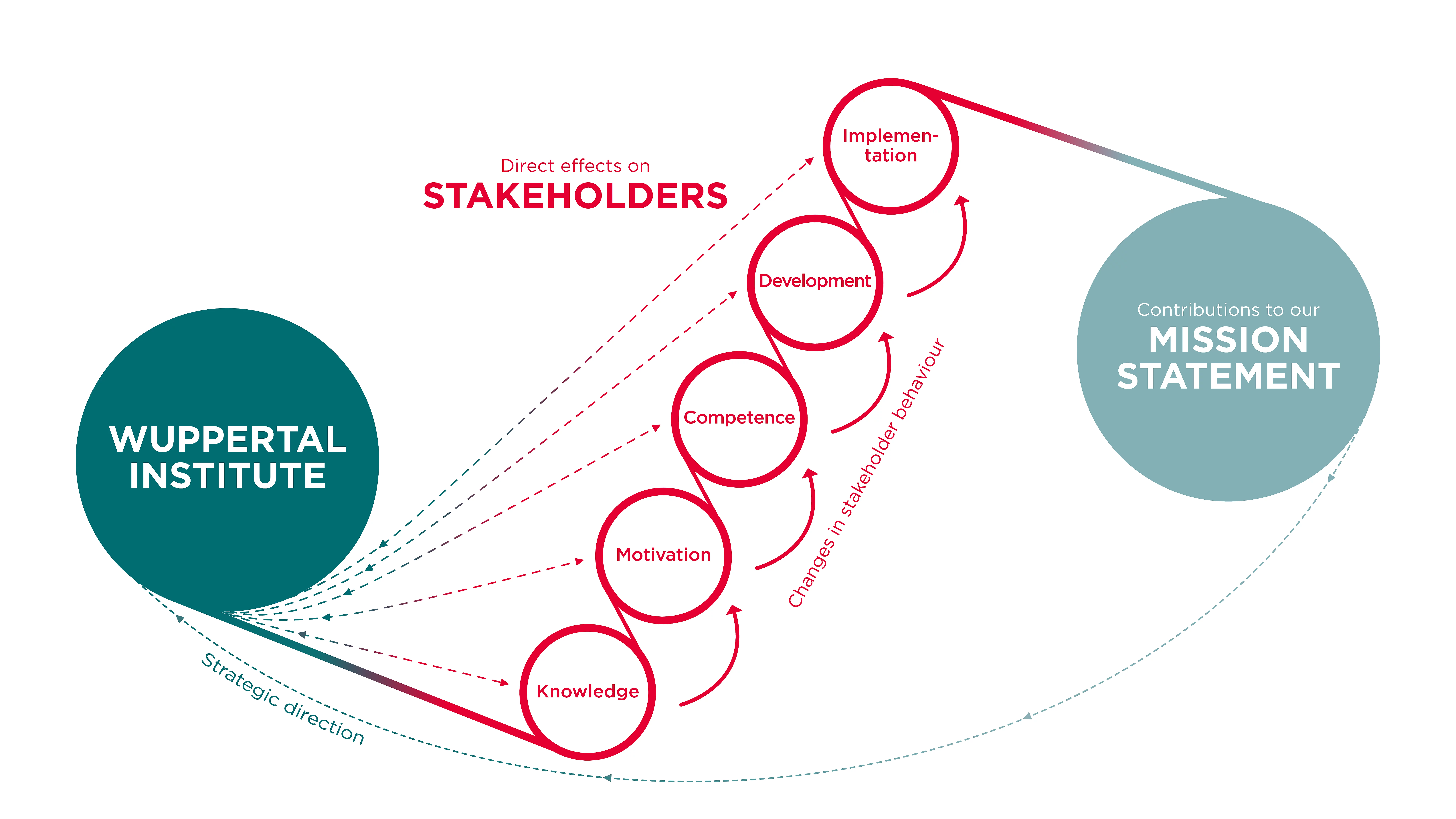
From knowledge to practice: Impact management at the Wuppertal Institute
The Institute has defined specific impact and transfer pathways, through which it aims to achieve impacts, in order to establish innovative impact management as one of its core competences. In the future, the Institute's staff will examine the degree to which these pathways bear fruit with the help of systematic, structured and digitally assisted impact recording (ex post) and impact planning (ex ante). This Institute-wide approach aligns fully with the position adopted by the German Science and Humanities Council, which underscores the importance of transfer strategies for the science ecosystem in Germany.
The aim is to help the Institute gain an even clearer understanding of the impacts of its work and to further accelerate and target the transfer of research results into practice. With this in mind, the Wuppertal Institute will further intensify its focus on close collaboration with practice-oriented stakeholders in politics, business and wider society in the future, while further promoting the co-creation of specific options for action. This includes development strategies, development scenarios, policy measures, process innovations and product innovations, along with their direct implementation. In addition, target group-specific transfer formats will translate the future knowledge generated from transformation research even more directly into specific tools for action and practical instruments. This will enable many more stakeholders on the ground to successfully implement change processes and benefit from the resulting value.
The Wuppertal Institute has expanded its management team to support the structural embedding of impact management. It has created a new director position – Head of Transfer and Impact – which, supported by the Strategy Development and Research Coordination Unit, will coordinate the development and implementation of an impact strategy and support the progression of an impact model.